


Table of Contents
- Why Verifying Florist Quality Online Matters
- Step 1: Check Online Florist Reviews and Ratings
- Step 2: Evaluate the Florist’s Portfolio and Product Photos
- Step 3: Ask Key Questions Before Ordering
- Step 4: Review the Florist’s Delivery Policy
- Step 5: Assess Florist Experience and Expertise
- Step 6: Distinguish Local Florists from Order-Gathering Services
- Step 7: Verify Payment, Privacy, and Refund Protections
- Frequently Asked Questions
Last Updated: October 18, 2026
Why Verifying Florist Quality Online Matters
Ordering flowers online should be simple: pick an arrangement, enter an address, expect blooms on time.
That’s why how to verify florist quality online matters.
We’ve watched customers get burned by order-gathering services that promise fresh flowers but deliver disappointment.
Below are seven concrete steps to verify florist quality online. These checks take 10-15 minutes but save you from costly mistakes.
Step 1: Check Online Florist Reviews and Ratings
Customer reviews are your first line of defense. A florist with 4.8 stars and 200 reviews differs fundamentally from one with 3.2 stars and 12. But star averages hide more than they reveal, so the real skill is verifying authenticity.
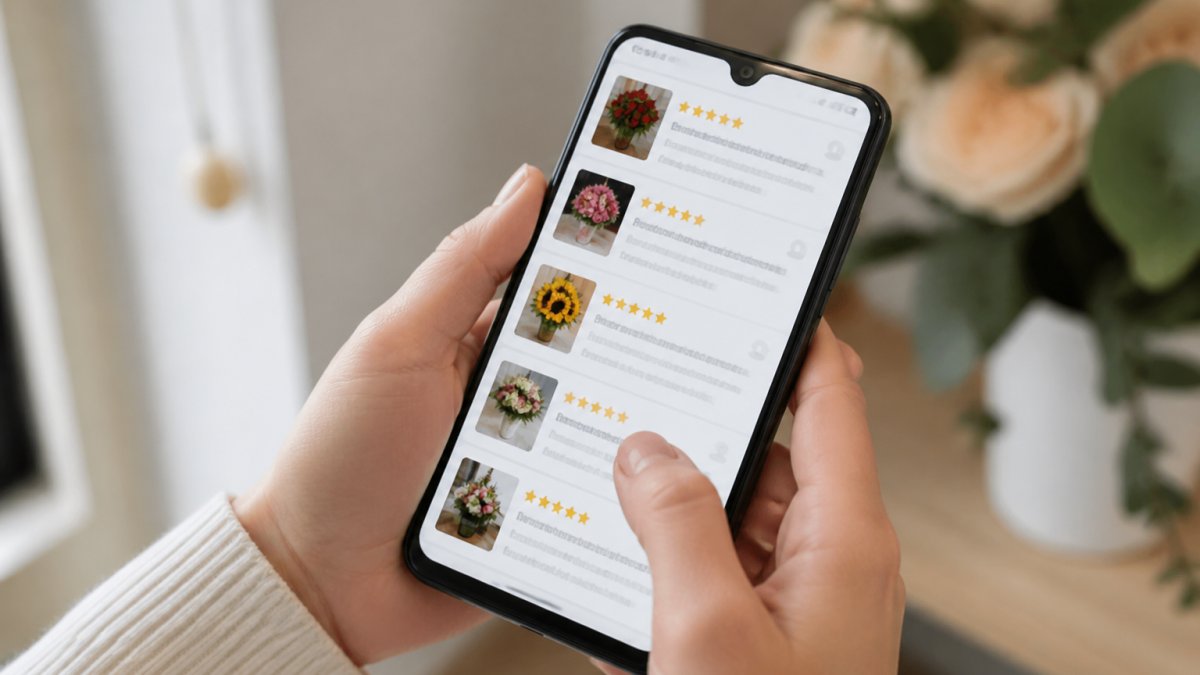
Where to find authentic reviews
Start with Google Business profiles, which shows reviews tied to customer accounts and often includes owner responses. Check Trustpilot reviews for independent feedback that florists can’t easily curate.
Pay attention to review dates. Recent reviews (past 3 months) matter more than old ones, a florist might have been excellent five years ago but changed ownership since. A cluster of glowing reviews followed by long silence can signal a change in management.
How to verify review authenticity
Star ratings alone are easy to manipulate. Use these checks:
- Recency and cadence. Authentic businesses accumulate reviews steadily. A sudden burst of 30 five-star reviews in one week followed by months of nothing is worth questioning.
- Detail and specificity. Real reviews mention the arrangement type, delivery window, condition on arrival, or how a problem was resolved. Repeated generic praise (“Great flowers!”) is a weak signal.
- Reviewer history. A long history of varied reviews is more credible than an account created the same week; multiple reviews from accounts with no other activity is a red flag.
Red flags in customer feedback
Watch for these warning signs:
- Generic praise with no details. “Great flowers!” repeated 20 times sounds fake. Real reviews mention specifics: “The roses lasted two weeks.”
- All 5-star reviews. No business is perfect; zero 3- or 4-star reviews is suspicious.
- Ignored freshness complaints. If customers say flowers arrived wilted and the florist never responded, that’s a major red flag.
Read the 3- and 4-star reviews first. They’re more honest than either 1-star complaints or 5-star praise. They show what actually goes wrong and how the florist handles it. Then check whether the florist responded and whether the same issue appears in other reviews.
Step 2: Evaluate the Florist’s Portfolio and Product Photos
Not all florist photos are equal. Some show real arrangements customers received; others are styled shots, stock imagery, or photos borrowed from other shops. Verify the photos represent work the florist actually does.
What quality photos should show
Real florist portfolios include:
- Multiple angles of each arrangement. One angle hides problems; three or four photos show depth, fullness, and stem quality.
- Close-up details. You should see individual petals, leaf condition, and whether stems look fresh or dried.
- Variety. A florist showing 50 versions of the same rose bouquet may not offer real customization.
How to verify photos are original work
Stock and borrowed images are common on order-gathering sites. Use these checks:
- Reverse image search. Save a product photo and run it through a reverse image search. If the same image appears on multiple florist sites, it’s stock or shared supplier imagery, not the florist’s own work.
- Consistency of setting and style. Original portfolios share a recognizable setting, wrapping style, or prop set. A page where every photo has a different background, lighting, and vase style is likely assembled from multiple sources.
- Metadata and upload dates. Check when photos were uploaded where visible. A portfolio with no recent uploads may not reflect current work; social feeds often show dates more clearly than website galleries.
Spotting real customer photos versus staged images
Professional florists mix studio photos with customer delivery photos, the proof that arrangements arrive looking like the website promised.
Real customer photos show:
- Flowers in actual homes, offices, or event spaces, not studio backgrounds
- Natural lighting instead of professional setups
- Occasional imperfections (a leaf at a slight angle, natural bloom-size variation)
Staged photos tend to be:
- Perfectly lit with professional backgrounds
- Every flower positioned identically
- Unrealistically saturated or contrasted
Compare advertised photos with customer results
The most reliable check is a side-by-side comparison. Find a product photo on the florist’s site, then look for customer photos of the same arrangement in reviews or social posts. Ask three questions:
- Does the size match? Advertised arrangements are sometimes photographed larger than the delivered version. Customer photos reveal the real scale.
- Does the flower mix match? Substitutions are normal, but the overall look and color palette should be close. Repeated customer photos showing a different mix suggest the product photo is aspirational, not representative.
- Does the condition match? Customer photos taken on arrival show freshness better than studio shots. If they consistently show tired blooms, the studio photo isn’t the whole story.
If a florist’s entire portfolio is studio photos with zero customer delivery shots, ask for references before ordering. They may not deliver what the photos show. A shop that can point to recent customer photos of the exact arrangement you’re considering is a stronger bet than one that can only show polished studio work.
Step 3: Ask Key Questions Before Ordering
A good florist wants to answer your questions. They should respond within a few hours, not days.
Essential questions about flower freshness and sourcing
Before you order, ask:
- Where do you source your flowers? Local growers, wholesale distributors, or imports? Local sourcing often means fresher flowers because they travel less distance.
- How fresh are the flowers when they arrive for arrangement? Fresh flowers should reach the shop within 24-48 hours of being cut; flowers sitting in a warehouse for a week won’t last as long.
- What’s your freshness guarantee? No committed timeframe is a warning.
Questions about design customization and expertise
Ask these to understand their design capabilities:
- Can you customize the arrangement to match my vision? Describe what you want; a skilled florist should understand and explain what’s possible.
- How long have you been designing arrangements? A florist with 10+ years knows how to make flowers last and how to work with seasonal availability.
- Do you offer design consultations? For weddings, events, or high-value orders, a consultation call shows they take the work seriously.
The florist’s answers to these questions reveal whether they’re a craft-focused professional or just processing orders. Professionals ask clarifying questions back. They don’t just say “yes” to everything.
Step 4: Review the Florist’s Delivery Policy
Delivery is where promises break. A beautiful arrangement means nothing if it arrives damaged or late.
Same-day delivery guarantees and cutoff times
Check what the florist actually guarantees:
- Same-day delivery cutoff. Brampton Florist, for example, accepts same-day orders by 1 PM. A florist claiming same-day delivery with no cutoff is either lying or rushing arrangements, which hurts quality.
- Service area limits. Same-day delivery may cover only the immediate area, with advance notice required farther out. Know your delivery address before ordering.
- Holiday and weekend policies. Same-day delivery often isn’t available on holidays; ask specifically about your dates.
Tracking, confirmation, and refund protections
Before ordering, confirm:
- Order confirmation timing. You should get an email confirming your order within an hour; 12+ hours means slow processing.
- Delivery tracking or updates. Does the florist text or email when the arrangement is out for delivery? Real-time tracking shows professionalism.
- What happens if flowers arrive damaged or don’t match the photo? A good florist offers a refund or replacement within 24 hours. Get this policy in writing before ordering.
Step 5: Assess Florist Experience and Expertise
Experience isn’t just a number. It’s proof the florist has solved problems and learned what works.
How long has the florist been in business
A florist in business for 5+ years has survived market changes, seasonal shifts, and customer demands.
Check for:
- Years in operation. Check their “About” page or business registration.
- Ownership continuity. Has the same person or family run the shop, or has it changed hands repeatedly? Continuity suggests stability.
- Awards or recognitions.
Specialty services and design credentials
Specialists show deeper expertise:
- Wedding experience. Can they handle ceremony arrangements, reception centerpieces, and bridal bouquets? Ask to see a wedding portfolio.
- Sympathy flower knowledge. Funeral arrangements require appropriate colors, sizes, and meanings; a florist with sympathy experience knows these nuances.
- Corporate or event design. Large-scale orders need different skills than single bouquets; ask if they’ve done similar work.
Step 6: Distinguish Local Florists from Order-Gathering Services
This is the most important distinction you’ll make: a local florist and an order-gathering service look identical online but work completely differently.
A local florist owns a physical shop, designs arrangements themselves, and controls quality from start to finish.
Here’s how to tell the difference:
- Can you visit in person? A real florist has a shop you can walk into. Order-gathering services often don’t.
- Do they have a customer service phone number? Call it. Does someone answer who knows the arrangements, or do you get a generic script?
- Do they show their own work? Real florists display their portfolio prominently. Order-gathering services often show generic stock photos.
Order-gathering services aren’t always bad, but you have less control. With a local florist, you know exactly who’s making your flowers.
Step 7: Verify Payment, Privacy, and Refund Protections
Before entering payment information, verify the florist protects your data and money.
Security checks
Look for these signals:
- HTTPS on their website. The URL bar should say “https://” (not “http://”) and show a lock icon, meaning your data is encrypted.
- Recognized payment methods. Major credit cards, PayPal, or Apple Pay are standard. If they only accept wire transfer or cryptocurrency, walk away.
- No requests for sensitive info via email. A florist should never ask for your credit card number by email or phone.
Refund and dispute policies
Before ordering, find and read their refund policy. Look for:
- Time window for refunds. Most florists offer refunds or replacements within 24 hours if flowers don’t arrive as promised.
- What qualifies for a refund. Does delivery damage count? What if you change your mind after ordering?
- How to request a refund. Is there a simple process, or do you have to jump through hoops?
Screenshot or save the refund policy before you order. If something goes wrong, you’ll have proof of what they promised.
Verifying florist quality online takes effort, but it protects your investment and ensures fresh, beautiful flowers. Start with reviews and photos, ask the right questions, and check delivery policies and payment security. Do these steps and you’re not just buying flowers, you’re buying peace of mind.
At Brampton Florist, we’ve built our reputation on transparency and quality: we answer questions quickly, offer same-day delivery by 1 PM, and stand behind every arrangement.
Frequently Asked Questions
How can I tell if online florist reviews are authentic?
Look for reviews with specific details about the arrangement, delivery experience, and flower freshness rather than generic praise. Authentic reviews often mention the occasion, arrangement style, and how long the flowers lasted. Check if the florist responds to both positive and negative reviews professionally. Verify reviews appear on multiple platforms (Google, Trustpilot, the florist’s website) and span several months or years. Be wary of clusters of identical 5-star reviews posted on the same day or reviews that sound like marketing copy.
What questions should you ask a florist before ordering online?
Ask about flower sourcing and freshness guarantees, whether the arrangement shown is hand-designed or a template, what substitutions may occur if blooms are unavailable, their delivery policy and same-day cutoff times, and whether they offer tracking or photo confirmation before delivery. For special events like weddings or funerals, ask about their experience with that type of arrangement, customization options, and whether they provide consultation. Request clarification on their refund or replacement policy if the flowers arrive in poor condition.
How do I know if a florist will deliver the exact arrangement I see online?
Ask the florist directly whether product photos show actual arrangements they’ve created or design templates. Request that they send a photo of your specific arrangement before delivery if possible. Check their website for real customer photos showing delivered arrangements alongside the original design. Read reviews mentioning whether flowers arrived as pictured. A reliable florist will be transparent about seasonal substitutions and explain any differences upfront rather than surprising you at delivery.
What’s the difference between ordering from a local florist versus an order-gathering service?
A local florist designs and delivers arrangements from their own shop, giving you direct communication with the designer and fresher flowers. Order-gathering services collect your order and send it to a network of florists elsewhere, adding delays and reducing quality control. Local florists typically offer same-day delivery, personalized service, and the ability to inspect arrangements before delivery. Check the florist’s website for a physical address, phone number, and clear service area. If they only show a website with no local business information, they may be an order-gathering middleman.


