


Table of Contents
- Understanding Wedding Flower Costs and Budget Ranges
- Wedding Flower Cost Breakdown by Category
- How to Save Money on Wedding Flowers Without Compromising Style
- Seasonal Wedding Flowers and Their Impact on Budget
- Wedding Florist Quote Checklist: What to Ask and Compare
- Sample Budgets by Wedding Size and Event Type
- Timeline and Decision Milestones for Floral Planning
- Frequently Asked Questions
Last Updated: October 17, 2026
Understanding Wedding Flower Costs and Budget Ranges
Budgeting for wedding floral design requires understanding the full scope of what you’re paying for. Floral costs span multiple categories: personal flowers, ceremony arrangements, reception centerpieces, labor, delivery, and setup fees.
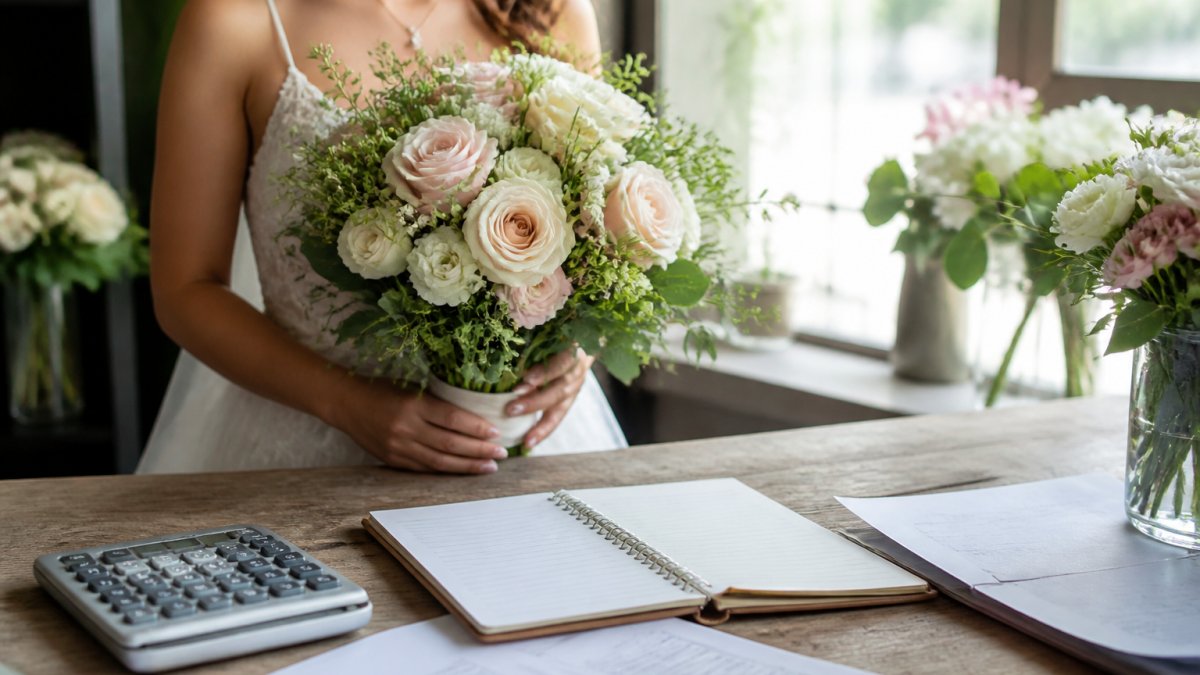
Total cost depends heavily on guest count, vision complexity, and season. A small elopement looks nothing like a 150-guest black-tie reception with elaborate installations. Understanding these variables upfront helps you set a realistic budget.
At Brampton Florist, we work with couples across the full spectrum of budgets.
Most couples allocate 8-12% of their total wedding budget to flowers, though this varies widely. Some spend less by focusing on greenery and seasonal blooms; others invest more in premium arrangements and installations. Neither approach is wrong.
Start your floral planning 6-9 months before your wedding date. This gives you time to research florists, understand pricing, and plan your budget without rushing into decisions. If you’re planning a peak-season wedding (June, September, October), starting even earlier helps secure your preferred florist.
Wedding Flower Cost Breakdown by Category
Floral costs break down into three areas: the flowers themselves, the labor involved in designing and executing pieces, and the logistical costs of delivery and installation. Understanding each category shows where your money goes and where you can adjust spending.
Personal Flowers: Bridal and Attendant Bouquets
The bridal bouquet is typically the most expensive single floral piece: larger than bridesmaid bouquets, using premium blooms and more detailed design work. Attendant bouquets cost less per piece but add up quickly across multiple attendants.
Count how many people need personal flowers: the bride, each bridesmaid, each groomsman (boutonnières), the mother of the bride, and family members receiving corsages. A wedding with eight attendants on each side means 18 individual pieces before ceremony or reception arrangements.
Personal flowers often represent 25-35% of the total floral budget. Simplifying attendant bouquets or choosing less expensive bloom varieties can free up funds for ceremony or reception areas where guests spend more time.
Ceremony and Reception Arrangements
Ceremony flowers include altar or arch arrangements, aisle markers, and sometimes guest book tables. Reception flowers include dining table centerpieces, cocktail table arrangements, and potentially installations like a flower wall.
Reception centerpieces are often the largest line item because you need one per table: a 150-guest wedding with 15 tables means 15 arrangements. Many couples prioritize 2-3 statement centerpieces for key tables and use simpler arrangements for guest tables.
Ceremony flowers are more about impact than quantity. A well-designed arch or altar arrangement creates a focal point without dozens of pieces, so choose blooms and styles that photograph well and complement your aesthetic.
The most cost-effective approach is often to invest heavily in the ceremony and bridal bouquet (the moments guests will photograph most), then simplify reception centerpieces by using greenery, candles, and fewer premium blooms.
Labor, Delivery, and Setup Fees
Many couples get surprised here. Florists charge not just for flowers, but for design time, the expertise to execute your vision, and the logistics of delivering and installing everything on your wedding day.
Labor typically includes design consultation, mockups or samples, constructing each arrangement, and custom work like wrapping. A full-service florist handles all of this; a flowers-only option costs less but requires you to do the work.
Delivery and setup fees cover transportation, travel time, and installation on your wedding day: arriving early to set up ceremony flowers, arranging centerpieces before guests arrive, and potentially breakdown afterward.
Some florists build these costs into per-arrangement pricing; others itemize them. Always ask for a complete breakdown when comparing quotes.
How to Save Money on Wedding Flowers Without Compromising Style
Saving money on flowers doesn’t mean accepting a less beautiful wedding. The real skill is making intentional choices about where to invest and where to simplify, so every dollar delivers visible impact.
Strategic Prioritization of Floral Elements
First, identify which floral elements matter most to you visually: the bridal bouquet and ceremony backdrop for some couples, elaborate reception centerpieces for others.
Rank your floral elements by visual importance. Your bridal bouquet appears in every photograph and deserves investment. Centerpieces are visible but not closely examined. Aisle markers create atmosphere but aren’t the focal point.
Use greenery and foliage as filler instead of expensive blooms.
Consider whether you need fresh flowers everywhere. Some couples skip floral centerpieces entirely and use candles, linens, and other décor; others use fresh flowers only for the ceremony.
Seasonal and Sustainable Choices
Seasonal flowers cost significantly less than out-of-season blooms because they’re abundant and require no special importing or greenhouse conditions. A summer wedding with sunflowers, dahlias, and zinnias costs far less than imported garden roses in February.
Understanding what’s in season for your wedding date is one of the easiest ways to reduce costs. Ask your florist what blooms peak during your wedding month and build your design around those options. Seasonal flowers are cheaper, fresher, longer-lasting, and more locally sourced.
Some florists discount for couples willing to use a seasonal palette or accept flexibility in exact bloom varieties.
Avoid planning your wedding around expensive blooms. If peonies are your dream flower but they’re only in season for a few weeks and your wedding is in November, you’ll pay premium prices for imported peonies. Consider shifting your wedding date, changing your flower choice, or accepting that this element will be a higher budget priority.
Seasonal Wedding Flowers and Their Impact on Budget
The season you choose has one of the largest impacts on floral costs. Spring and summer weddings use abundant, affordable blooms. Fall benefits from dahlias and chrysanthemums.
Spring (April-May) offers tulips, peonies, ranunculus, and garden roses at reasonable prices. Summer (June-August) provides sunflowers, dahlias, zinnias, and abundant foliage.
Fall (September-November) features dahlias, chrysanthemums, amaranthus, and seasonal foliage. Not quite as inexpensive as spring and summer, fall flowers are still reasonably priced with sophisticated color palettes.
Winter (December-February) is the most expensive season for fresh flowers, with most blooms imported and availability limited.
According to seasonal flower availability guides from the Society of American Florists, understanding your local growing season helps identify which blooms will be affordable and abundant during your wedding month.
Wedding Florist Quote Checklist: What to Ask and Compare
Knowing what to ask ensures you compare apples to apples and don’t miss hidden costs. Many couples compare only total price without understanding what’s included, leading to surprises later.
Essential Questions for Your Florist
Ask every florist these questions before requesting a quote:
-
What is included in your pricing? Does it cover design consultation, delivery, setup, and breakdown? Or are these separate line items?
-
What is your delivery and setup fee? How far do you travel? Do you charge per location or a flat fee?
-
What is your design process? Do you offer a consultation call? Will you provide sketches or samples? How many revision rounds are included?
-
What happens if my requested flowers aren’t available? Will they suggest alternatives, or do you charge extra for substitutions?
-
What is your timeline for orders? How far in advance do you need a final decision? Do you charge more for rush orders?
-
Do you have experience with my venue? Have you worked there before? Do you know the layout and any restrictions?
-
What is your cancellation or postponement policy? If your wedding date changes, what happens to your deposit?
-
Can you provide references or photos of recent weddings? Ask specifically for weddings similar in size and style to yours.
Comparing Proposals and Identifying Hidden Costs
Create a simple comparison listing each florist’s pricing for the same elements: bridal bouquet, bridesmaid bouquets, boutonnières, ceremony flowers, centerpieces, delivery, and setup. This shows which florist is actually most affordable for your needs.
Note what’s itemized separately versus included in arrangement pricing. A florist charging $50 per centerpiece plus a $200 delivery fee might cost less than one charging $75 per centerpiece with free delivery, depending on order size.
Watch for unusual or unexplained fees. Some florists charge design, consultation, or rush fees. These aren’t necessarily unreasonable, but they should be stated upfront so you can factor them into your decision.
Ask each florist for a detailed proposal that breaks down every element and its cost. Request this in writing so you can compare accurately. Verbal quotes are easy to misremember or misinterpret.
Sample Budgets by Wedding Size and Event Type
These sample budgets show how floral costs scale with guest count and complexity. Use these as a starting point to understand the range, then adjust based on your specific choices around bloom selection, design complexity, and seasonal availability.
| Wedding Size | Estimated Guest Count | Estimated Floral Budget Range | Key Elements | Budget Allocation Notes |
|---|---|---|---|---|
| Elopement | 2-20 | Minimal | Bridal bouquet, small ceremony arrangement | Focus on bridal bouquet; minimal other flowers |
| Intimate | 20-50 | Modest | Bridal/attendant bouquets, ceremony flowers, simple centerpieces | 2-3 attendants; 4-6 centerpieces |
| Small | 50-75 | Moderate | Full bridal party flowers, ceremony, 8-10 centerpieces | 4-5 attendants; more elaborate designs |
| Medium | 75-125 | Substantial | Full bridal party, ceremony, reception centerpieces for 10-15 tables | More floral elements; potential installations |
| Large | 125-200+ | Premium | Elaborate bridal party flowers, ceremony, reception centerpieces, installations, statement pieces | Investment in multiple focal points; labor-intensive |
These ranges reflect typical spending patterns, not requirements. A 100-person wedding might spend significantly less with seasonal flowers and simpler designs, or more with premium blooms and elaborate installations.
Clarity about your priorities matters most. A couple spending modestly but thoughtfully on their bridal bouquet and ceremony flowers often achieves more visual impact than one spreading a larger budget across many elements with no clear focal points.
Timeline and Decision Milestones for Floral Planning
9-12 months before: Research florists and gather inspiration images to identify your style preferences and understand what’s realistic for your vision.
6-9 months before: Meet with 2-3 florists, discuss your vision, and get initial quotes.
4-6 months before: Select your florist and sign a contract.
2-3 months before: Hold a detailed design consultation to finalize all elements, colors, and quantities. Review mockups or samples if offered.
1 month before: Confirm final details, including delivery time, setup location, and any last-minute changes.
1-2 weeks before: Final check-in to confirm everything is on track and address last-minute questions.
Day before or morning of: Confirm delivery and setup times and be available for any final questions.
Starting early removes stress and allows thoughtful decisions rather than rushed ones.
Planning your wedding flowers doesn’t have to be overwhelming when you understand the costs and choices involved.
Frequently Asked Questions
How much should I budget for wedding flowers?
Wedding flower budgets vary based on guest count, venue size, and floral complexity. Most couples allocate 8-12% of their total wedding budget to flowers. Pricing depends on quantity, dates, delivery, and your florist’s expertise. Contact a local florist like Brampton Florist for a personalized quote based on your specific vision and event size.
What does a wedding flower cost breakdown typically include?
A complete wedding flower cost breakdown covers personal flowers (bridal bouquet, bridesmaid bouquets, boutonnieres, corsages), ceremony arrangements, reception centerpieces, floral installations, labor, delivery, and setup fees. Some florists also charge for rentals (vases, pedestals) and taxes separately. Request an itemized quote to see exactly where your budget is allocated.
Are seasonal wedding flowers more affordable?
Yes, seasonal flowers are typically more affordable because they’re locally available and require less transportation and storage. Spring blooms like tulips and peonies, summer roses and dahlias, and fall chrysanthemums cost less than out-of-season premium blooms. Choosing seasonal varieties can reduce your wedding flower budget significantly while supporting fresh, vibrant arrangements.
What should a wedding florist quote include?
A complete wedding florist quote should itemize each arrangement type with quantities and prices, specify flower varieties and colors, list labor costs, detail delivery and setup charges, clarify rental fees, note any taxes, and confirm the delivery date and time. A thorough quote prevents surprises and helps you compare proposals fairly. Ask your florist to provide this level of detail.
How can I prioritize my wedding flower budget if funds are tight?
Prioritize the most visible elements: the bridal bouquet, ceremony backdrop, and head table centerpieces. Use greenery and filler flowers to add volume over expensive premium blooms. Consider repurposing ceremony flowers for the reception, using dried flowers or candles to extend arrangements, and substituting high-cost blooms with seasonal alternatives that deliver similar visual impact.
When should I book a wedding florist?
Book your florist 6-12 months before your wedding, especially if you’re planning a peak-season event (spring or summer). Early booking secures your preferred florist and date, allows time for design consultations, and helps you plan your budget accurately. For off-season weddings, 3-6 months is typically sufficient, but booking early is always advantageous.


