


Last Updated: November 1, 2026
Quick Summary
To choose wedding flowers by season, start with your wedding date and build your palette from blooms at their peak that month, since in-season stems generally arrive fresher and tend to cost less. Match those seasonal stems to your venue’s light, height, and color, and ask your florist which blooms are grown locally versus imported.
- Peonies have a short season, so booking early is wise for spring weddings.
- Keep summer bouquets in water until the last moment and avoid direct sun during photos.
- Fall blooms like amaranthus and pampas grass handle cooler air well for outdoor photos.
- Amaryllis can be scarce around the holidays, so reserve early and ask about substitutions.
- Many couples book their florist six to nine months before the wedding.
Table of Contents
- Why Seasonal Wedding Flowers Matter for Your Date and Budget
- How to Match Seasonal Wedding Flowers to Your Venue and Vision
- Spring Wedding Flowers: Tulips, Peonies, and Lilac
- Summer Wedding Flowers: Hydrangeas, Garden Roses, and Sweet Pea
- Fall Wedding Flowers: Warm Hues and Textured Blooms
- Winter Wedding Flowers: Amaryllis, White Roses, and Evergreens
- Building a Month-by-Month Flower Availability Plan
- Booking Your Wedding Floral Consultation
- Frequently Asked Questions
Why Seasonal Wedding Flowers Matter for Your Date and Budget
Learning how to choose wedding flowers by season is the fastest way to get fresher blooms and a lower bill. In-season stems generally arrive fresher and tend to cost less than flowers forced into the wrong month. Seasonal wedding flowers are blooms grown to peak in the weeks around your wedding date, which means better quality and fewer import fees.
Out-of-season flowers can sometimes be imported, which may affect cost and appearance.
Here is what matters most:
- In-season blooms are often a good option for freshness
- Local growing seasons shape what looks its best
- Your date decides more than your color palette does
If budget is tight, start with the season and build your palette from there. For a deeper look at costs, read our guide to budgeting for wedding floral design.
How to Match Seasonal Wedding Flowers to Your Venue and Vision
Start with the room, then pick the flowers. A tall, airy hall suits tall branches and loose arrangements. A low-ceiling space works better with low centerpieces that keep sightlines open.
Follow these steps:
- List your venue’s light, height, and color
- Choose two or three in-season flowers you love
- Match bouquet shape to your dress and body line
- Pick a color palette that fits the room
- Ask your florist which stems hold up in that setting
A common mistake is choosing flowers before seeing the space. Warm hues can clash with wood paneling or bright carpet. Bring venue photos to your consultation.
Spring Wedding Flowers: Tulips, Peonies, and Lilac
Spring gives you some of the most loved blooms of the year. Tulips, peonies, daffodils, hyacinths, sweet pea, and lilac all shine in this window. Peonies have a short season, so booking early is wise.
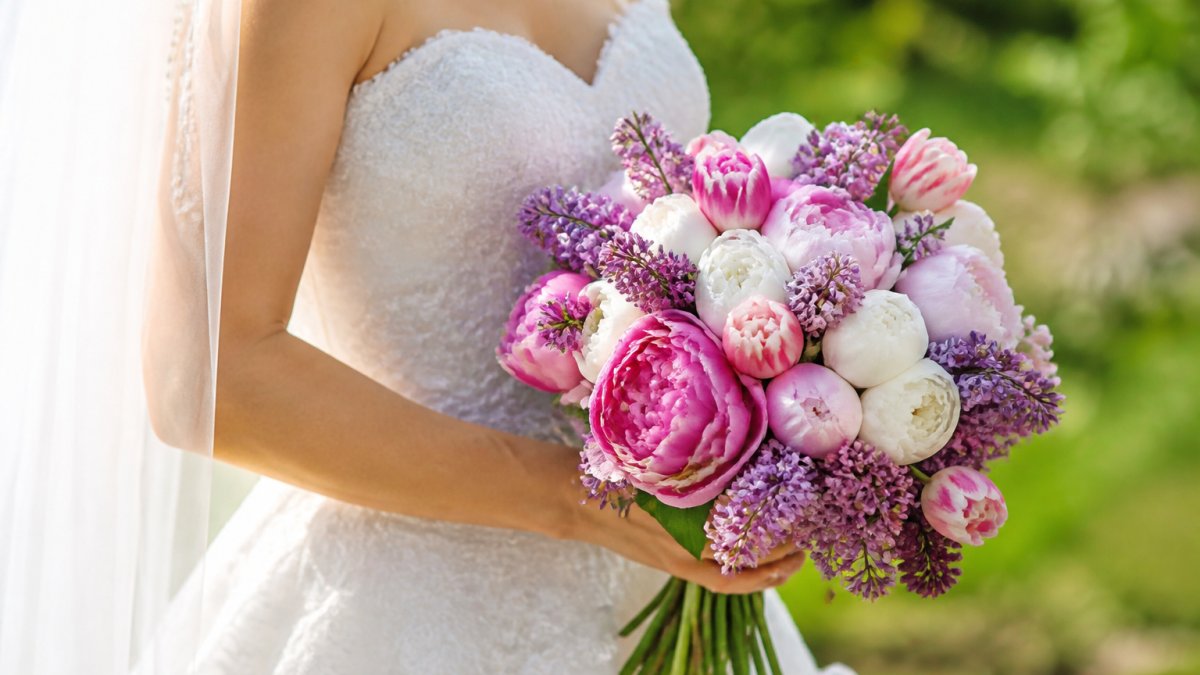
Spring wedding flowers work well in soft, loose arrangements. Think garden-style bouquets with mixed textures.
Watch out: peonies and lilac are fragile once cut. Keep them cool and out of direct sun before the ceremony.
Summer Wedding Flowers: Hydrangeas, Garden Roses, and Sweet Pea
Summer offers the widest choice, and heat is the catch. Hydrangeas, garden roses, sweet pea, and white roses all peak now. Hydrangeas need plenty of water, so ask your florist how they will be conditioned.
Summer wedding flowers need a plan for the weather:
- Keep bouquets in water until the last moment
- Avoid direct sun during photos
- Choose sturdy stems for outdoor ceremonies
A common mistake is leaving bouquets in a hot car. Even an hour can wilt sweet pea. Ask your florist about delivery timing so your flowers arrive close to the ceremony.
Fall Wedding Flowers: Warm Hues and Textured Blooms
Fall rewards texture over delicate petals. Amaranthus, pampas grass, and garden roses bring warm hues and movement. These blooms handle cooler air well, which makes them reliable for outdoor photos.
Fall arrangements suit a relaxed, layered style. Mix trailing amaranthus with dried grasses for depth.
One insider tip: pampas grass sheds, so keep it away from light-colored fabrics until the ceremony starts.
Winter Wedding Flowers: Amaryllis, White Roses, and Evergreens
Winter is the season for bold, structured blooms. Amaryllis, white roses, and evergreens give you drama when little else is growing. Amaryllis stems are thick and sturdy, which suits many taller designs.
Winter wedding flowers pair well with candlelight and deep greens. White roses stay a safe, classic choice all season.
Amaryllis can be scarce around the holidays, so reserving early and asking about substitutions before finalizing an order is a sensible step.
Building a Month-by-Month Flower Availability Plan
A seasonal table is a starting point, but wedding dates fall on specific weeks, and availability shifts within each season. The calendar below breaks the year into months and pairs each window with blooms that are typically at their best, plus a note on what to plan around. Treat it as a planning aid, not a guarantee, growing region, weather, and supply chain all move the edges.
| Month | Blooms Typically at Their Best | Plan Around |
|---|---|---|
| January | Amaryllis, white roses, evergreens, tulips (forced) | Post-holiday scarcity; order early |
| February | Tulips, roses, hyacinths, amaryllis | Valentine’s demand tightens supply |
| March | Tulips, daffodils, hyacinths, ranunculus | Late-winter gaps; confirm imports |
| April | Tulips, daffodils, lilac (late month), ranunculus | Lilac window is short and weather-dependent |
| May | Peonies (late month), lilac, sweet pea, tulips | Peony supply peaks briefly; book early |
| June | Peonies, garden roses, sweet pea, hydrangeas | Heat arrives; condition hydrangeas well |
| July | Hydrangeas, garden roses, lavender, sweet pea | Peak heat; avoid direct sun on bouquets |
| August | Hydrangeas, garden roses, dahlias, sunflowers | Dahlia supply strong; watch stem weight |
| September | Dahlias, garden roses, amaranthus, hydrangeas | Transition month; confirm late-summer stems |
| October | Amaranthus, dahlias (early), pampas grass, roses | Frost risk in cooler regions |
| November | Amaryllis (late), roses, evergreens, pampas grass | Holiday demand builds; reserve early |
| December | Amaryllis, white roses, evergreens, tulips (forced) | Holiday scarcity; substitutions likely |
Regional caveats. Growing seasons vary widely by climate and growing region. A bloom that peaks in June in a warmer area may not appear until July in a cooler one, and imported stems can fill gaps at a higher cost. Ask your florist which of these blooms are grown locally in your month versus shipped in, because that distinction affects both freshness and price.
Substitutions when a bloom is unavailable. If your must-have flower is out of season or short on supply, ask for alternatives by shape, color, scent, and price rather than by name alone. A few common swaps:
- Peonies → garden roses or ranunculus (similar fullness and softness)
- Lilac → stock or sweet pea (similar scent and cluster shape)
- Hydrangeas → mophead roses or carnations in tight clusters (similar mass)
- Dahlias → cushion chrysanthemums or garden roses (similar petal density)
- Amaryllis → calla lilies or tall roses (similar structure and height)
Bring your wedding date and two or three inspiration photos to your florist, and ask for a written substitution list before you sign. That single step prevents most day-of surprises.
For a sense of what is growing right now, browse our current flower selection. For broader trend context, see our seasonal flower trends guide.
Booking Your Wedding Floral Consultation
Booking early helps protect your date and preferred blooms, and the right timing depends on the season. As a general rule of thumb, many couples book their florist six to nine months before the wedding, and peak-season dates often benefit from booking further in advance.
A practical planning timeline:
- 9-12 months out: Book your florist and reserve peak-season blooms
- 6-8 months out: Confirm palette, bouquet style, and ceremony/reception scope
- 3-4 months out: Finalize stem lists and sign off on substitutions
- 4-6 weeks out: Confirm delivery times, setup, and venue access
- 1 week out: Final headcount and any last changes
Consultation checklist. Bring these to your first meeting:
- Your wedding date, venue, and ceremony start time
- Venue photos showing light, ceiling height, and existing decor
- Two or three inspiration photos for bouquets and centerpieces
- Your color palette and any fabric swatches
- A realistic budget range and your top three priorities
- Names of any must-have flowers and your flexibility on each
Questions to ask your florist:
- Which blooms are in season on my date, and which will be imported?
- What would you substitute if a flower is unavailable, and at what price difference?
- How do you handle heat, cold, and transport on the day?
- What is included in delivery, setup, and teardown?
- Can you provide a written quote with stem counts and design complexity broken out?
Budget context. Seasonality, imported stems, stem counts, and design complexity can all affect the final cost. Pricing depends on quantity, dates, and delivery, so request a current quote from Brampton Florist’s website. Tall centerpieces and dense, hand-tied bouquets generally use more stems than low arrangements, so it can help to ask for options at different scopes. For a deeper look at costs, read our guide to budgeting for wedding floral design.
The single most useful thing you can do is ask for a written substitution list and a stem-count breakdown before you sign. It turns a vague vision into a plan you can actually budget for.
For help choosing and vetting a florist, read our tips for choosing wedding florists. Local couples can also check our guide to wedding florists in the area before booking.
Frequently Asked Questions
How do I choose wedding flowers that are in season?
Start with your wedding date, then ask your florist which blooms are at their peak that month in your growing region. Spring favors tulips, daffodils, and lilac; summer brings hydrangeas and sweet pea; fall offers dahlias and amaranthus; winter relies on amaryllis and evergreens. Choosing in-season flowers usually means better freshness, more color options, and lower cost because they travel shorter distances and need less climate control.
Are seasonal wedding flowers less expensive?
Often, yes. Flowers harvested in their natural blooming months generally require less refrigeration and shipping. Out-of-season blooms may need to be imported, which can add to the price. Your total floral cost also depends on stem count, arrangement size, and delivery logistics, so ask your florist for a quote based on your specific date and color palette.
How far in advance should I book a wedding florist?
Many couples book their florist six to nine months before the wedding, especially for peak-season dates. Certain blooms such as peonies have short windows, so earlier booking can help. Booking early lets your florist secure the best seasonal stems and gives you time to adjust the design if a variety becomes unavailable closer to the date.
What should I ask a florist about seasonal flower availability?
Ask which flowers are at their peak on your date, what substitutions they recommend if a bloom is unavailable, and whether they source locally or import. Also ask how heat or cold affects durability at your venue, what the delivery and setup timeline looks like, and how pricing changes between in-season and imported options. A good florist will walk you through a month-by-month availability plan before you commit.
Planning a wedding around the seasons takes some homework, but the payoff is fresher flowers and a bill you can live with. Brampton Florist can help you match every arrangement to your date, with expert design, full wedding service, and reliable delivery. Get started with Brampton Florist and build a floral plan that looks right on the day.


