


Last Updated: October 30, 2026
Quick Summary
Natural pest control for rose bushes targets the insects that damage roses while leaving helpful insects largely untouched. Start by inspecting new growth and leaf undersides weekly, and matching the leaf damage to the right pest. Healthy growing habits such as good air flow, base watering and clearing fallen leaves prevent many problems before they start.
- Inspect new growth and leaf undersides at least once a week during the growing season.
- Spray aphids off with a strong jet of water, repeating every few days.
- Mix a small amount of mild liquid dish soap with water for a homemade spray.
- Repeat soap treatments every few days for two to three weeks to catch newly hatched insects.
- Avoid spraying in full sun or hot weather, since sprays can scorch leaves.
Table of Contents
Natural pest control for rose bushes works because it targets the insects that damage roses while leaving the garden’s helpful insects largely untouched.
Roses attract a predictable set of pests. A common mistake is waiting until the plant looks badly damaged before acting.
Natural pest control also fits well with how roses grow. Healthy plants with good air flow, regular watering at the base, and clean fallen leaves are less likely to host pests in the first place. Pruning out crowded or damaged canes is one of the simplest steps you can take. Maintaining this environment ensures that your garden remains a sanctuary for beneficial insects while you implement safe pest control practices that protect your household companions.
Common Pests on Roses and How to Identify Them
Most rose pests fall into a few groups: sap-feeding insects like aphids and mites, and chewing insects like caterpillars and beetles. Aphids are the most common. They are small, soft-bodied, and cluster on new growth, buds, and the undersides of leaves.
- Aphids: Small green, black, or pink clusters on tender shoots
- Spider mites: Tiny specks and fine webbing on the undersides of leaves
- Whiteflies: Small white insects that lift off the leaf when disturbed
- Caterpillars: Chewed leaves and holes in buds and flowers
Watch out: Mites are hard to see with the naked eye. Hold a white sheet of paper under a leaf and tap the branch. Moving specks that fall onto the paper are a sign of mites.
Matching Leaf and Stem Symptoms to the Right Pest
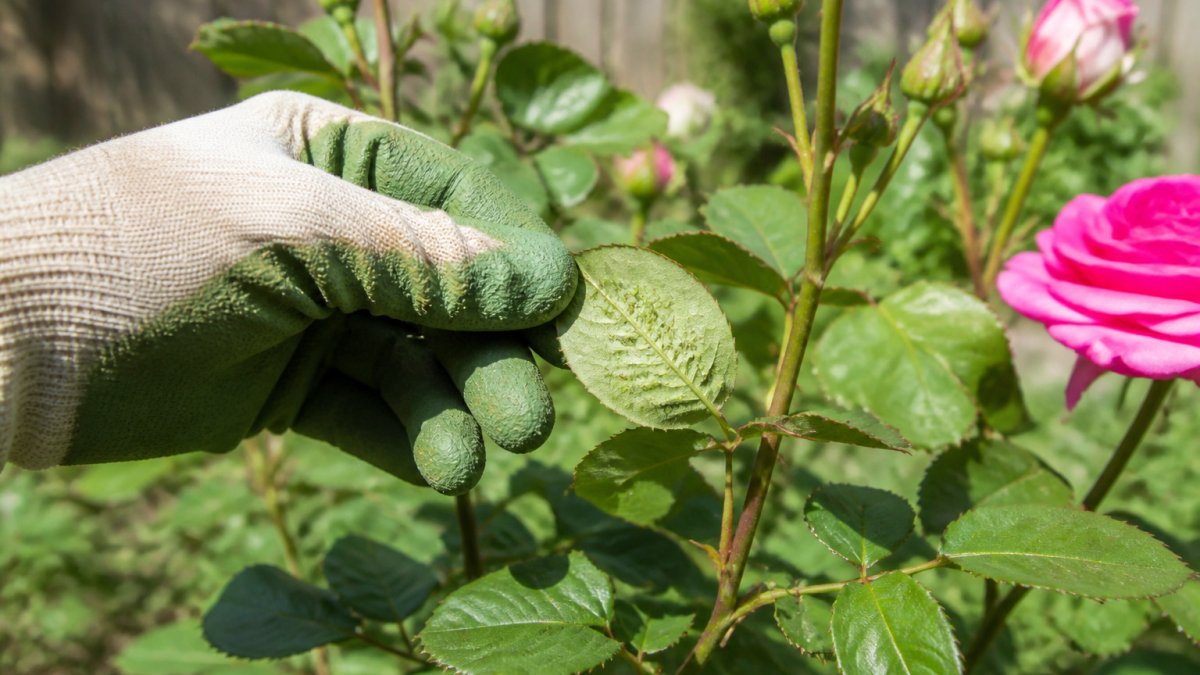
Look at the damage before you choose a treatment. Curled, distorted new growth usually points to aphids. Yellow stippling with fine webbing points to mites. Leaves with ragged, chewed edges usually mean caterpillars or beetles.
Sticky residue on leaves, often called honeydew, is a sign that sap-feeding insects are present. Black sooty mold may grow on that residue. The mold does not harm the rose directly, but it shows an active pest problem.
Natural Ways to Get Rid of Aphids on Roses
Aphids are the first pest most rose growers face, and they are easy to manage. Start by spraying plants with a strong jet of water to knock the insects off. Repeat every few days while you watch for new clusters.
Next, apply a homemade or commercial organic spray to the undersides of leaves, where aphids hide. Coverage matters more than strength. A spray that misses the underside of leaves will leave many insects alive.
Some gardeners also plant companion plants that attract helpful insects. Ladybugs and lacewings feed on aphids and can help keep numbers low.
Watch out: Do not spray in full sun or during the hottest part of the day. Sprays can scorch leaves when the sun is strong.
How to Make and Use a Homemade Spray for Rose Bushes
A homemade spray is one of the simplest natural options. It works best on soft-bodied insects like aphids and mites. Mix a small amount of mild liquid dish soap with water, then add it to a spray bottle. Shake well before each use.
Soap sprays break down the outer layer of soft insects, so they must touch the pest directly. Spray thoroughly, covering both upper and lower leaf surfaces, stems, and new buds. Repeat the treatment every few days for two to three weeks to catch newly hatched insects.
Test the mix on one leaf first and wait a day. Some roses are more sensitive than others, and leaves can burn if the mix is too strong.
Soap, Neem Oil and Sulfur: Dilution and Application
Many gardeners use three common natural products. Each one has a different use.
- Soap spray: Good for aphids and mites. Use a mild dish soap and water mix, applied directly to pests.
- Neem oil: Works against a wider range of insects, including whiteflies and some caterpillars. Dilute according to the label, and spray in the evening to protect bees.
- Sulfur: Used for mites and some fungal problems like black spot and powdery mildew. Avoid use in hot weather, because sulfur can damage leaves above certain temperatures.
Always read and follow the product label, since concentrations differ by brand. Apply each product on a cool, calm day, and avoid spraying open flowers where bees are active.
Protecting Pollinators and Beneficial Insects While You Treat
Roses depend on pollinators, and many natural sprays can harm bees if used carelessly.
Ladybugs, lacewings, and predatory mites also help control pests. Broad sprays can kill these helpers along with the pests. Spot-treating only infested areas leaves more beneficial insects alive.
When natural methods are not working, check whether you have treated both leaf surfaces and repeated applications consistently.
How to Prevent Pests on Rose Bushes Through the Season
Prevention is easier than treatment. Inspect plants at least once a week during the growing season, looking at new growth and the undersides of leaves. Early detection makes control much simpler.
Good habits help a lot. Water at the base of the plant rather than over the leaves. Remove fallen leaves and spent petals, since they can hold pests and disease. Prune to keep air moving through the bush.
A simple monitoring calendar can help:
- Spring: Inspect new growth for aphids and apply a preventive spray if needed
- Summer: Check weekly for mites during hot, dry spells
- Fall: Clean up debris and remove fallen leaves to reduce overwintering pests
Booking Help for Your Rose Garden or Floral Needs in Brampton
Browse the local florist blog for further tips and seasonal ideas.
We offer delivery in Brampton and surrounding areas. Please check the delivery details during checkout.
If you are looking for floral options beyond pest care, you can explore our everlasting roses collection for long-lasting arrangements.
Frequently Asked Questions
Can I use soapy water on rose bushes for pests?
Yes, a mild soap spray is one of the most common natural treatments for aphids, whiteflies and soft-bodied mites on roses. Use a plain liquid dish soap without bleach, degreasers or added fragrance, mixed at a low concentration such as about one to two teaspoons per litre of water. Test the mixture on a few leaves first and wait a day to check for scorching. Spray thoroughly, covering both upper and lower leaf surfaces, and repeat every few days until pests are gone. Rinse with plain water if the leaves look sensitive, and avoid spraying in strong midday sun.
When is the best time to spray roses for pests?
Early morning or late afternoon is best, when temperatures are cooler and pollinators like bees are less active. Avoid spraying in full sun or during the hottest part of the day, since sprays can burn foliage. Start checking roses as soon as new growth appears in spring, and monitor weekly through the growing season. Treat as soon as you spot early signs, because small infestations are much easier to control than established colonies. Spray again after rain, which washes off most natural treatments.
How can I prevent pests from returning to my roses?
Prevention starts with healthy plants and regular inspection. Water at the base rather than on the foliage, prune to improve airflow, and remove fallen leaves and spent blooms that can harbour pests and disease. Keep the bed free of weeds, and consider companion plants such as garlic, chives and marigolds that some gardeners use to deter pests. Check the undersides of leaves every week or so during spring and summer. Early detection combined with a repeated spray schedule keeps populations from building up again.
What pests commonly attack rose bushes?
The most common pests on roses are aphids, spider mites, whiteflies, thrips and rose slugs. Aphids cluster on new growth and buds, and leave sticky honeydew behind. Spider mites cause stippling and fine webbing on leaves. Whiteflies gather on the undersides of leaves and flutter up when disturbed. Identifying the pest first matters, because each responds best to a slightly different natural approach, and the damage pattern on the leaves usually points to the culprit.


