


Last Updated: November 7, 2026
Quick Summary
A local florist arrangement usually lasts longer because the flowers spend less time out of water, often cut and conditioned close to the day you receive them and kept cool until they leave the shop. The real difference is processing discipline, not geography, since recutting stems, changing water and proper cooler temperature beat a supermarket every time.
- Sturdy flowers like chrysanthemums and carnations can last about two weeks with basic care.
- Recut each stem at a 45-degree angle and cut about 2 cm off to reopen water channels.
- Change the water every two days and recut lightly each time.
- Flower food feeds blooms with sugar, acidifies water and slows bacterial growth.
- A drop of bleach in a full vase slows bacteria and a small pinch of sugar feeds blooms as a stopgap.
Table of Contents
- Why Local Florist Arrangements Outlast the Rest
- How Long Do Cut Flowers Last From a Local Shop?
- Local Florist vs Supermarket Flowers: The Freshness Gap
- How to Make Flowers Last Longer After They Arrive
- Does Flower Food for Cut Flowers Really Work?
- Questions to Ask a Florist About Sourcing and Freshness
- Order a Longer-Lasting Bouquet From Brampton Florist
- Frequently Asked Questions
Why Local Florist Arrangements Outlast the Rest
A local florist arrangement usually lasts longer because the flowers spend less time out of water.
Here is the core idea in one sentence: flower longevity is mostly a race against time out of water, heat, and bacteria, not a matter of luck.
That race starts at harvest. It ends in your living room. A shorter chain begins with choosing a quality florist who handles flowers carefully from harvest onward.
Below, we break down the seven reasons, the realistic vase life you can expect, and a simple care routine that adds days to any bouquet.
How Long Do Cut Flowers Last From a Local Shop?
Vase life varies by variety. Sturdy flowers such as chrysanthemums and carnations can last about two weeks with basic care, while delicate blooms such as tulips and sweet peas often fade in under a week.
The range is wide because “cut flowers” covers very different plants. A carnation and a poppy are not playing the same game.
Flower-by-Flower Vase Life Expectations
Here is what we would realistically expect, assuming clean water and a cool spot:
| Flower | Typical Vase Life | Notes |
|---|---|---|
| Chrysanthemum | 10-14 days | Sturdy stems, low water demand |
| Carnation | 7-14 days | Sensitive to ethylene gas |
| Rose | 5-10 days | Recut stems help a lot |
| Alstroemeria | 7-10 days | Long-lasting, drops leaves over time |
| Lily | 5-10 days | Remove pollen as buds open |
| Gerbera | 5-7 days | Heavy drinker, needs shallow water |
| Tulip | 3-7 days | Keeps growing in the vase |
| Sweet pea | 3-5 days | Delicate petals, fades fast |
Typical Vase Life
A mixed bouquet will show its shortest-lived flower first. That is normal, and it is why we plan mixed arrangements around how the blooms age together.
Local Florist vs Supermarket Flowers: The Freshness Gap
The freshness gap comes down to time in transit and how flowers are held. Supermarket flowers often travel through a long distribution chain before they hit the shelf. Local flowers move from cold storage to the design table to your hands.
That gap is real, but it is not magic. Let’s be honest about it.
What Local Sourcing Does and Does Not Guarantee
Local sourcing can help when it shortens the time between harvest and hydration. It does not guarantee better flowers on its own, and the quality of handling matters as much as distance.
The real difference is processing discipline, not geography. A local shop that recuts stems, changes water, and keeps the cooler at the right temperature will beat a supermarket every time. If you want to dig into how local options compare, our guide to local florist alternatives in Brampton breaks down the choices.
How to Make Flowers Last Longer After They Arrive
A useful step is to recut the stems at an angle and get them into clean water fast. Flowers can lose days in the first hour at home if the stems are left out of water.
Here is the routine we recommend to every customer:
- Fill a clean vase with lukewarm water and flower food.
- Strip leaves below the waterline. Leaves in water rot and feed bacteria.
- Recut each stem at a 45-degree angle with sharp scissors. An angled cut exposes more surface for water uptake.
- Cut about 2 cm off to reopen the stem’s water channels.
- Arrange and place away from heat vents and direct sunlight.
- Change the water every two days and recut lightly each time.
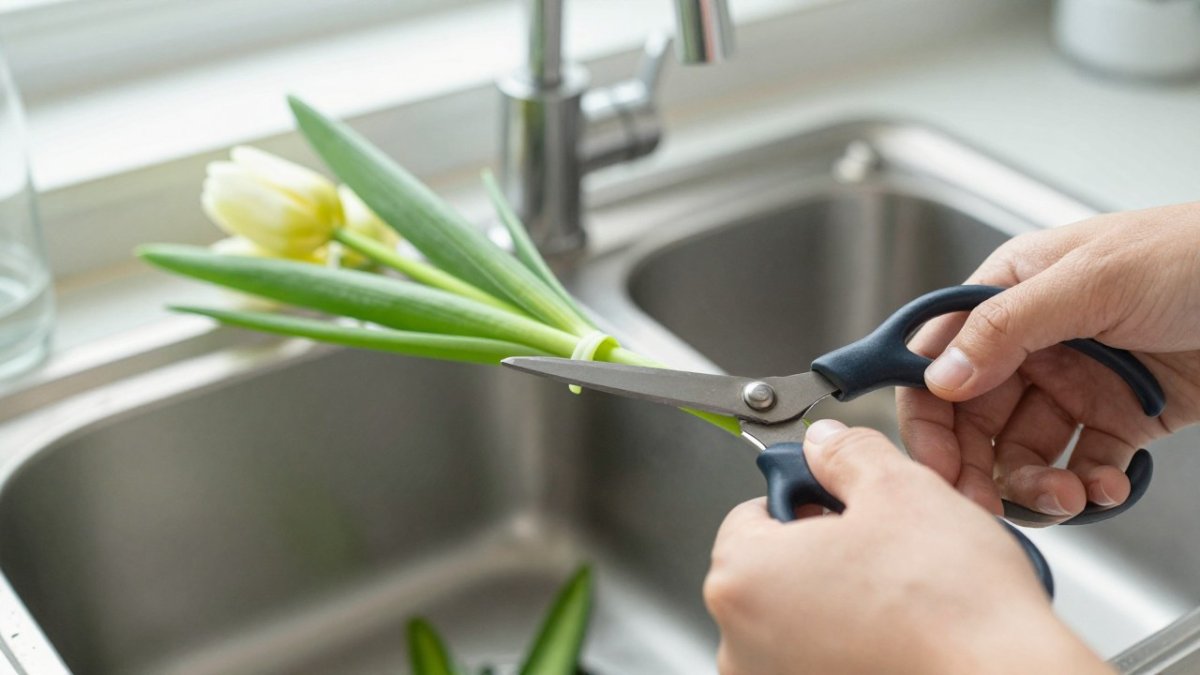
Sharp blades are better for cutting stems than dull ones, which can crush stem ends.
A Day-by-Day Care Schedule for Mixed Arrangements
A mixed bouquet needs a routine, not a one-time fix. Here is how we would care for one across a week:
- Day 1: Recut stems, strip lower leaves, place in fresh water with flower food.
- Day 2: Check water level. Top up if low.
- Day 3: Change water fully, recut stems by a few centimeters, remove any fading blooms.
- Day 5: Change water again, clean the vase walls, recut.
- Day 7: Pull out spent flowers so the rest keep their space and water.
Small, regular steps beat one heroic effort. This is the habit that separates a bouquet that lasts a week from one that lasts a weekend.
Does Flower Food for Cut Flowers Really Work?
Flower food works, but not for the reason most people think. It does three jobs: it feeds the blooms with sugar, it acidifies the water, and it slows bacterial growth.
The sugar matters most for buds that still need to open. The antibacterial agent matters most for vase water that would otherwise cloud within days.
What flower food will not do is rescue a dirty vase or a stem that was never recut. If you skip the basics, the little packet cannot save you.
What Is Actually in Flower Food
A typical commercial flower food packet contains three things:
- A sugar source, usually sucrose or glucose, to replace the energy the cut stem can no longer get from the plant.
- An acidifier, often citric acid, to bring the water pH down.
- A biocide, to slow the bacteria and fungi that clog stem ends.
Some formulas add a wetting agent to help water move up the stem. The exact recipe varies by brand, but the three-part structure is standard. That is why homemade substitutes rarely match a commercial packet: it is easy to add sugar, harder to get the acid and biocide balance right.
How to Use Flower Food Correctly
Most people underuse flower food or use it once and forget it. Here is how to get the most from a packet:
- Mix the full packet with the amount of water stated on the label. A half packet in a full vase is underdosing.
- Use lukewarm water so the powder dissolves fully.
- Re-mix a fresh batch at every water change, not just the first one. The sugar and biocide are consumed or diluted over time.
- Keep the vase topped up with fresh mix rather than plain water, or the concentration drifts down.
A common pattern is that arrangements last longest when the water is changed on schedule and the food is re-dosed each time. The packet is a routine, not a one-time event.
When Flower Food Is Not Enough
Flower food cannot fix a stem that was crushed by dull scissors, a vase that was not washed, or water that has gone cloudy. If the water clouds within a day, bacteria are already ahead of the biocide. Dump the water, wash the vase with soap, recut the stems, and start fresh.
Watch out: adding sugar without any antibacterial control turns your vase into a breeding ground for bacteria, and the stems will rot faster than they would in plain water.
A Simple Homemade Substitute
If you run out of flower food, a drop of bleach in a full vase slows bacteria, and a small pinch of sugar feeds the blooms. Keep both minimal. Too much of either does more harm than good. This is a stopgap, not a replacement for a balanced commercial mix.
Flower Food and Mixed Bouquets
Mixed arrangements are limited by their shortest-lived stems, and flower food helps unevenly. Sugar encourages buds to open, which is good for tight roses and lilies but can push delicate blooms like sweet peas to fade faster. If a mixed bouquet contains very delicate stems, a slightly weaker mix and more frequent water changes often work better than a strong feed.
That is why the care schedule matters as much as the packet. Flower food buys days, but only when it is paired with clean water, recut stems, and a cool spot.
Questions to Ask a Florist About Sourcing and Freshness
Ask direct questions and listen for specific answers. A good florist will tell you when flowers arrived and how they were stored. Vague answers are a red flag.
Here is our short list:
- When did these flowers arrive in the shop?
- Are they kept in a cooler, and at what temperature?
- Are any of these stems from local growers or nearby farms?
- How often is the vase water changed on the display floor?
- Which flowers in this arrangement are the most delicate?
A confident florist answers these without flinching. If you are ordering for a specific event, ask about delivery timing too, since a bouquet that sits in a hot van loses days before it reaches the door.
We would also ask what the shop recommends for care. A florist who hands you a care card or a small packet of flower food is telling you they expect the arrangement to last.
Order a Longer-Lasting Bouquet From Brampton Florist
Freshness is a chain, and the last link is your kitchen counter. We are a family-owned and operated shop, open seven days a week, with same-day delivery on orders placed by 1 PM.
Our designers hand-craft each arrangement. You can explore our floral designs for every occasion to see how we put seasonal flowers together. If you want something built from flowers that came in that morning, the Florist Choice Seasonal Vase lets our designers work with the day’s best stems. For a mixed arrangement, the Bright Mixed Vase is a good place to start.
Order online or call us, and we will help you pick an arrangement that suits the occasion and the season.
The difference between a bouquet that lasts three days and one that lasts ten often comes down to who handled it before you did. Brampton Florist is family owned and operated, open seven days a week, with same-day delivery on orders placed by 1 PM. Our designers hand-craft fresh arrangements and can guide you toward the varieties that hold up best. Get started with Brampton Florist and enjoy flowers that stay beautiful for longer.
Frequently Asked Questions
Why can flowers from a local florist last longer?
Flowers generally last longer when they spend less time in transit and are kept cool and hydrated before reaching the customer. Combined with proper care at home, such as fresh water and a clean vase, good handling supports vase life.
How often should I change the water in a flower arrangement?
Change the water every two days, and recut the stems at an angle at the same time. Clean water limits bacterial growth, which is a common cause of wilting and fading blooms. If the water looks cloudy before the two-day mark, change it sooner. Always use a clean vase, because residue on the glass feeds bacteria. A few minutes of regular maintenance is one of the simplest ways to make flowers last longer.
Does flower food for cut flowers really make them last longer?
Flower food for cut flowers typically contains a sugar to feed the stems, an acidifier to lower water pH, and a biocide to slow bacterial growth. Used as directed, it can extend vase life, especially in mixed bouquets where stems compete for water. It is not a substitute for clean water and recut stems, though. If you run out, change the water every two days and keep the arrangement away from heat vents and direct sunlight.
Which cut flowers last the longest in a vase?
Sturdy stems and durable petals generally last longest. Chrysanthemums, carnations, alstroemeria, and orchids often hold up for one to two weeks with basic care. Delicate petals such as tulips and sweet peas fade faster, often within a week. In a mixed arrangement, the shortest-lived stems set the pace, so remove wilting blooms as they fade. Ask your local florist which varieties in a bouquet are the most and least long-lasting so you know what to expect.


