


Last Updated: November 1, 2026
Quick Summary
A flower subscription is worth it for homes that already buy flowers regularly, since it replaces that habit with better stems and less effort. If flowers are a rare splurge, a recurring charge will feel like clutter. Judge the cost per vase-life week, not the monthly price.
- Subscriptions are only cost-effective if you would otherwise buy flowers at roughly the same frequency.
- Divide the all-in delivery cost by about 1.5 weeks of realistic vase life to compare.
- Start biweekly and treat the first two deliveries as a test before committing.
- Change the water every two days and re-cut stems to extend vase life.
- Confirm skip, pause and cancellation terms in writing before you subscribe.
Table of Contents
- What a Flower Subscription Actually Delivers
- Flower Subscription vs One-Time Bouquet: Which Fits Your Home
- Flower Delivery Subscription Cost: What Drives the Price
- How Often to Get Flowers Delivered for Your Household
- Bouquet Size, Flower Variety and What Arrives at Your Door
- How to Make Cut Flowers Last Longer Between Deliveries
- Pausing, Skipping and Cancelling a Flower Subscription
- Choosing a Local Florist for Your First Subscription
- Frequently Asked Questions
What a Flower Subscription Actually Delivers
A flower subscription is a recurring delivery of a fresh bouquet, typically weekly, biweekly, or monthly, chosen by the florist or by you. Whether a flower subscription service is worth it for homes comes down to one question: will you actually use the flowers you pay for? Subscribers tend to fall into two kinds.
The difference isn’t income or taste. It’s whether the household already buys flowers regularly.
If you currently pick up a bunch at the grocery store every couple of weeks, a subscription mostly replaces that habit with better stems and less effort. If flowers are a rare splurge, a recurring charge will feel like clutter. Canada’s food and household spending guidance is worth a look when you’re weighing a new recurring expense against your budget.
What arrives is straightforward: a hand-designed arrangement, usually wrapped or in a vase. The value is in the rhythm, not the novelty.
Flower Subscription vs One-Time Bouquet: Which Fits Your Home
Subscriptions win on convenience. One-time bouquets win on control. That’s the whole comparison in two sentences.
A one-time bouquet suits birthdays, anniversaries, sympathy gestures, and the occasional “the house feels bare” moment. You pay when you want flowers and skip when you don’t.
A subscription flips that. You commit to a delivery frequency, and the flowers show up whether or not you remembered. For households that genuinely want fresh flowers on the table most weeks, that automation is the point. You stop deciding, and the flowers simply arrive.
Subscriptions are only cost-effective if you would otherwise buy flowers at roughly the same frequency. If you would buy once a month anyway, a monthly subscription is a fair swap.
Best for: households that already buy flowers regularly and want better quality with less planning.
Skip if: you buy flowers a few times a year and prefer picking exactly what you want, when you want it.
Flower Delivery Subscription Cost: What Drives the Price
The most useful way to judge a subscription is by cost per vase-life week, not monthly sticker price, because it answers whether the subscription is cheaper, equal to, or more expensive than how you already buy flowers.
Here is the framework, with worked examples using round figures so you can substitute your own quotes.
Step 1: Get the all-in monthly cost. Add the subscription charge and every delivery fee. For a sense of what local delivery actually costs, see how much flower delivery costs in Brampton.
Step 2: Divide by vase-life weeks. A well-cared-for bouquet typically holds up for about 7 to 10 days. Use 1.5 weeks as a realistic average. Divide the all-in delivery cost by the number of weeks a bouquet realistically lasts, then compare that figure with what you currently spend on a comparable week of flowers.
Step 3: Compare like with like. A grocery bunch and a hand-designed arrangement are not the same product. Compare the subscription’s per-delivery cost to a local florist’s one-time bouquet of similar size, not to a supermarket wrap.
| Buying pattern | Approx. annual spend | Flowers in the home |
|---|---|---|
| Grocery bunch every 2 weeks at $35 | ~$910 | Most weeks |
| Local bouquet every 2 weeks at $80 + $12 delivery | ~$2,390 | Most weeks, better quality |
| Monthly subscription at $77 all-in | ~$924 | One good arrangement per month |
| Biweekly subscription at $77 all-in | ~$2,030 | Continuous rotation |
If your current flower spending sits well below the subscription total, the subscription is an upgrade in spend, not a saving.
What actually moves the price:
- Stem count and arrangement size. A fuller arrangement costs more at every tier.
- Flower variety. Seasonal stems grown locally cost less than imported or out-of-season blooms, and they usually last longer because they travel less.
- Delivery frequency. Weekly costs more per month but usually less per arrangement than monthly, because the florist’s design and delivery time is spread across more orders.
- Delivery fee. This is the line most people forget. Ask whether the fee is waived above a certain order value.
- Vase or container. Some plans include one on the first delivery only; others charge each time.
Judge a subscription on cost per vase-life week, not cost per month. Divide the all-in delivery cost by about 1.5 weeks of realistic vase life, then compare that number to what you currently spend for a week of flowers. If the gap is small, you are buying quality and convenience at a fair price. If the gap is large, you are paying for flowers you would not otherwise buy.
How Often to Get Flowers Delivered for Your Household
Frequency should follow how fast your household actually uses up a bouquet, not how often you wish the house looked fresh.
Use this decision framework before you pick a frequency.
1. Count your rooms and display spots. One arrangement on a dining table or entryway is the typical home setup.
2. Match arrangement size to the room. A compact bouquet suits a side table, bathroom counter, or desk. A taller arrangement anchors a dining table or a wide entryway.
3. Check for allergies and pets before you commit. If anyone in the home has seasonal allergies or there are pets, ask your florist about the stems in the arrangement before you order.
4. Map your travel and hosting calendar. A subscription delivers whether or not you are home.
5. Be honest about replacement habits. If you currently replace flowers only when the old ones are visibly dead, a weekly plan will pile up.
| Frequency | Best for | Watch out for |
|---|---|---|
| Weekly | Busy entryways or dining tables; frequent hosts; households that replace flowers the moment they fade | Cost adds up fast; you need to keep up with water changes |
| Biweekly | Most homes; a good middle ground for one or two display spots | Stems may be fading before the next delivery if care slips |
| Monthly | Casual buyers; smaller spaces; one display spot | Flowers become an occasional treat, not ongoing decor |
| Quarterly | Seasonal decor, offices, gift-style deliveries | Long gaps; easy to forget the subscription exists |
If you are unsure, start biweekly and treat the first two deliveries as a test. Track how many days each bouquet actually looks good. If you are throwing out fading stems before the next delivery arrives, move to weekly. If the vase sits empty for a week before the next delivery, move to monthly.
Bouquet Size, Flower Variety and What Arrives at Your Door
Subscriptions often come in two forms: florist’s choice, where the designer picks seasonal blooms, and curated, where you choose a style or colour palette if the florist offers that option. You can see examples of florist choice left in stock to get a feel for how those arrangements are selected.
What most first-time subscribers don’t realize: the bouquet you see online is a style reference, not a photo of your exact stems. Seasonal availability changes weekly. A reputable local florist will tell you this upfront and design within the spirit of the arrangement.
Arrangement size matters more than stem count for how a bouquet reads in a room. A compact arrangement suits a side table; a taller one anchors a dining table. Tell your florist where the flowers will live.
How to Make Cut Flowers Last Longer Between Deliveries
Longer vase life is the single biggest factor in whether a subscription feels worth the money. A bouquet that lasts ten days costs half as much per day as one that lasts five. Here’s how to get the most from every delivery:
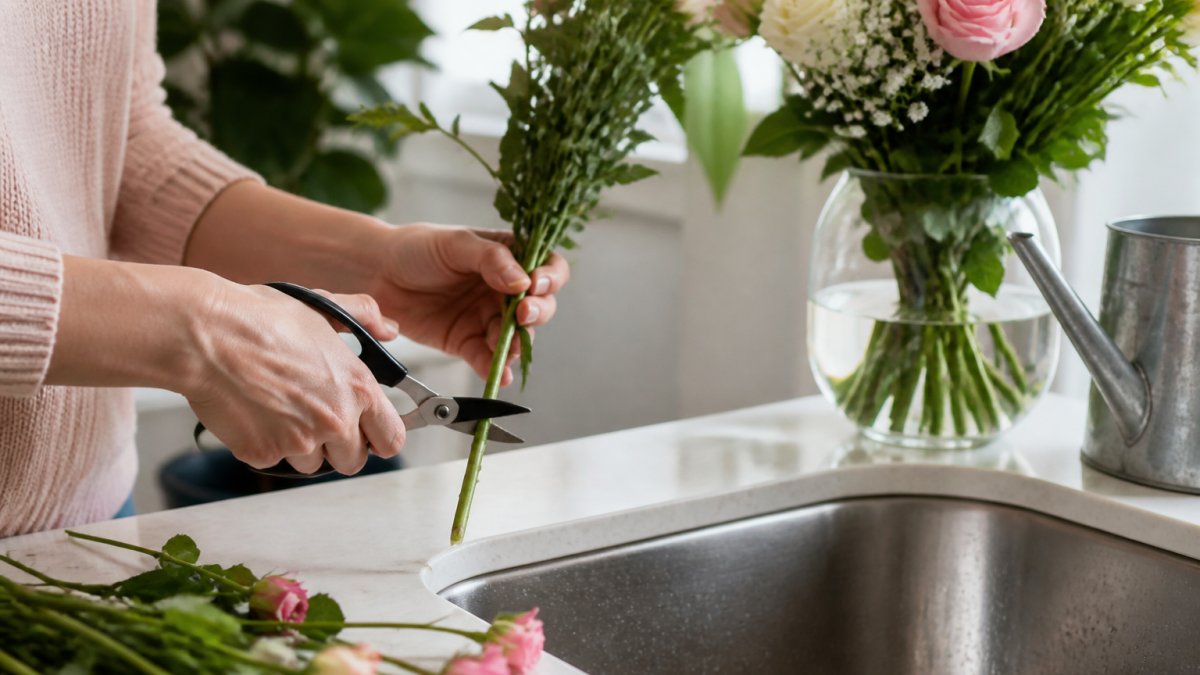
- Trim the stems at an angle with sharp scissors or a knife, about 2 to 3 cm off the bottom, immediately before placing them in water. Angled cuts take up water better than flat ones.
- Change the water every two days. Bacteria build up fast in standing water and shorten vase life more than anything else.
- Re-cut the stems each time you change the water. A fresh cut keeps the stems drinking.
- Keep flowers out of direct sun, heat vents, and fruit bowls. Ripening fruit releases ethylene, which ages flowers quickly.
- Use the flower food packet if your delivery includes one.
Watch out: skipping the water change is the most common reason a subscription bouquet dies early. If the water looks cloudy, it’s already costing you days.
Pausing, Skipping and Cancelling a Flower Subscription
Flexibility is where subscriptions earn or lose their reputation. Before you sign up, ask three questions: can I skip a single delivery, can I pause for a set period, and what’s the notice period for cancelling?
Ask whether you can skip a delivery or pause a subscription, and what the cancellation terms are before you sign up. If a provider won’t answer these questions clearly before you subscribe, that’s your answer.
Confirm the terms in writing before you subscribe. A flexible subscription you actually use beats a rigid one you resent.
Choosing a Local Florist for Your First Subscription
Local florists can design with what is fresh that week and deliver within a defined area. That’s the practical case for going local over a national online retailer, but it’s worth reading a direct comparison before you decide: local florist or online retailer for flowers covers the trade-offs honestly.
Two more things to check before committing. First, ask about freshness: whether freshness guarantees on online flower orders are worth it explains what a guarantee should actually cover. Second, confirm the delivery area and schedule, since a subscription only works if deliveries arrive reliably on the day promised.
Brampton Florist is a family owned and operated local flower shop, open seven days a week, with same-day delivery available on orders placed by 1 PM. Our designers hand-craft arrangements, and you can contact us to talk through frequency, size, and seasonal blooms before you commit.
Frequently Asked Questions
Is a flower subscription worth it for a home?
It depends on how often you would buy flowers anyway. If you already pick up a bouquet most weeks or want fresh stems on the table without planning each purchase, a recurring flower subscription removes that errand and often costs less per arrangement than ordering ad hoc. Homes that only want flowers a few times a year usually do better with one-time bouquets.
Are flower subscriptions cheaper than buying bouquets one at a time?
Pricing depends on quantity, dates, and delivery. Check our website or request a quote for current prices. The saving only holds if you actually use every delivery, so compare the monthly price against how many bouquets you would genuinely buy in that period.
Can you pause or cancel a flower subscription?
Ask about the options for skipping a delivery, pausing, or cancelling, including the notice window and whether skipped weeks roll over, since terms vary. Confirm the details in writing when you sign up so a vacation or a tight month does not trigger an unwanted delivery.
How long do subscription flowers typically last?
Vase life depends on the stems and on how well they are cared for. Trimming stems at an angle and keeping the vase out of direct sun can help. Ask your florist which seasonal blooms in the current arrangement are the longest lasting.
A flower subscription only pays off when the flowers actually reach your table and last long enough to enjoy. If you’re tired of grocery-store bunches that fade in three days, we can help you build a delivery rhythm that fits your home. Brampton Florist offers hand-designed bouquets, flexible scheduling, and reliable local delivery, with same-day service available when you order by 1 PM. Get started with Brampton Florist and keep fresh flowers in your home without the weekly scramble.


